River Safety
Safety guidelines and procedures for club members
A river safety guide for all river users at Twickenham Yacht Club
Essential Safety Guidelines
1. First and foremost, you are responsible for your own safety.
2. Before going afloat, you must first assess the risk, considering the Weather, the River Flow (and the Environment Agency “traffic light” Boards), and the Tide.
3. Always wear a Buoyancy Aid.
4. Ensure that you are familiar with the river Rules of the Road. Specifically, whilst power vessels should give way to non-powered (canoes, paddle boards and sailing dinghies) commercial vessels have priority – keep out of their way.
5. Ensure that you are appropriately dressed to take account of the weather and conditions.
6. Information from various sources have been provided below to assist you in doing this, however, Twickenham Yacht Club is providing this information in good faith and is in no way in control of, or responsible for this information.
Navigation Rules
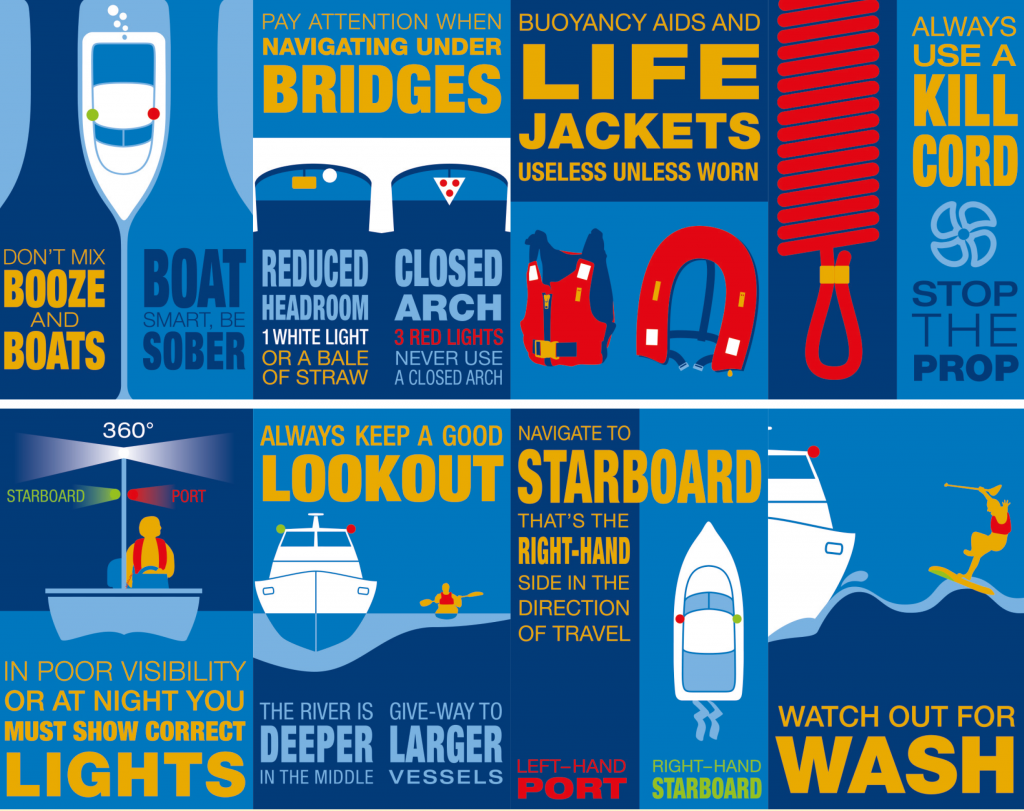
Navigate to starboard, the right hand side of the river, regardless of the direction you’re travelling in.
Powered vessels give way to unpowered vessels, this includes sailing dinghies. However, priority must always be given to commercial operators at all times (for us, this is mainly the ferry / passenger carrying pleasure cruisers) – keep out of their way!
Remember that the tide is weaker closer to the river bank as it is shallower.
Weather Conditions
Check current weather conditions before heading out on the river. Monitor wind speed, direction, and forecast changes throughout your session.
Tide Times – Richmond Lock
Always check tide times before sailing. The tidal range can significantly affect river conditions and navigation.
River Flow at Kingston Bridge
Monitor river flow conditions and Environment Agency flag warnings before going afloat.
Current Flag Warning System
Green Flag: Average fluvial flows – safe conditions
Yellow Flag: Elevated flows – proceed with caution
Red Flag: High flows – unsafe conditions
Related Information
River Safety
Essential safety guidelines for all river users including navigation rules and weather conditions.
Contact Safety Officer
Get in touch with our safety team for questions or to report concerns.